

Overview
Twitter is a popular social media platform that can be used by marketers to reach a wide audience and promote their products or services. Integrated with Zeotap it enables marketers to reach a wide audience, promote their products or services and engage with customersSupported Identifiers
This channel supports email and MAIDs.Available Actions and Supported Features
The following table lists the available action types for the integration and the supported features for each action type:Components of Twitter
Ensure that you have details about the below components of Twitter available before creating a Destination.Ad Account Id
This is the 16 digit Twitter Ad Account ID. Ensure that this Ad Account is linked to your Twitter Business Manager. You can find your Ad Account ID by navigating to Ads Manager > Account drop-down menu.Create a Destination for Twitter
Perform the following steps to create a Destination for Twitter:1
Log into the Zeotap CDP App and go to the DESTINATIONS application.
2
Click + Create Destination.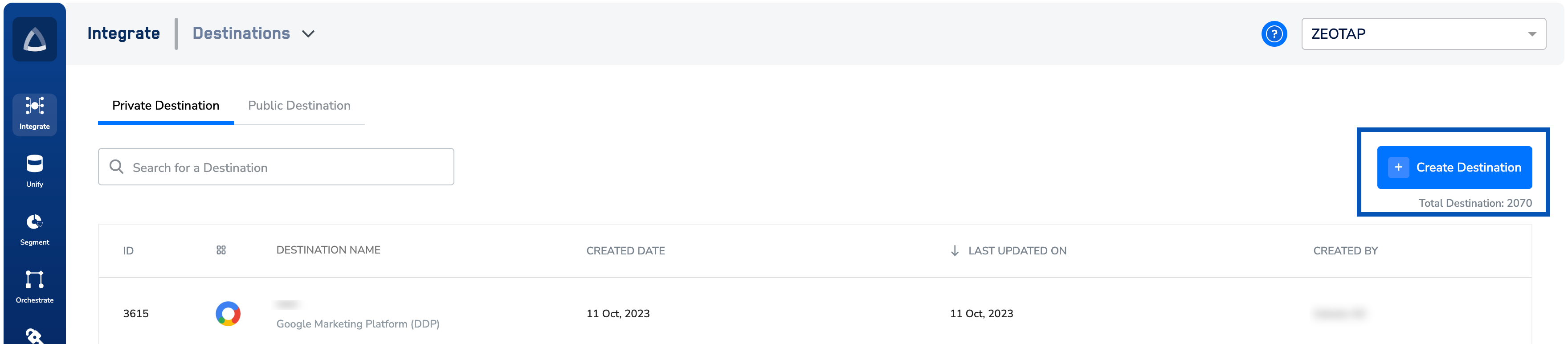
3
Under All Destinations, search for Twitter.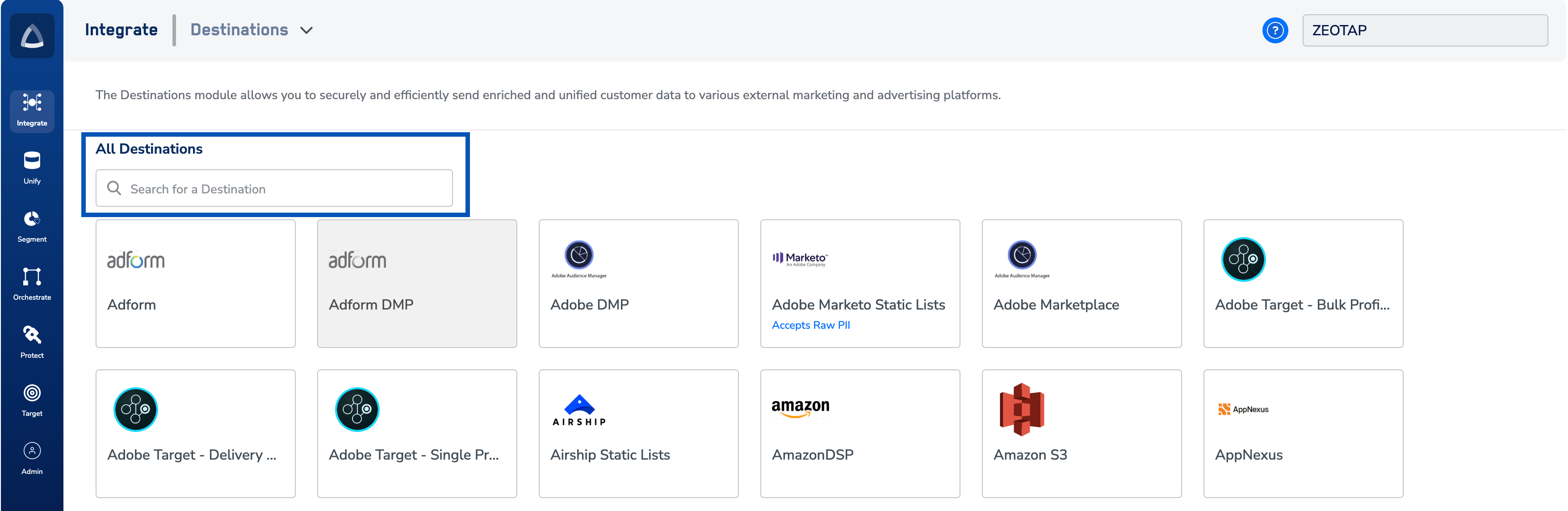
4
Click Twitter. A screen appears displaying details about the particular destination towards the left. On the right-hand side of the screen find a list of fields that are required for the integration to be established. Enter the required details as mentioned in the following steps:a. Enter a name for the Destination.b. Enter the Ad Account Id for the particular Twitter Ad account.c. Review all the values entered above and then click Next to proceed.
Note:The user must provide access to Zeotap in their Twitter Ad Account. This can be done by following the steps mentioned here.
- User ID (to provide access to is) – ZeotapID
- Access type – Ads Manager
5
In the new screen that appears, choose the appropriate Action and mapping as explained below.a. Choose the desired action under Choose your Action and then choose the corresponding identifiers under Map the Fields. By default, the Output Identifiers that are accepted by the platform such as, MAIDs, Cookies, email Ids and more are displayed. However, you can edit, add or remove an identifier from the list. To do so, refer here.b. Click Create Destination. The created Destination gets listed in the Target and Audiences applications, which can be linked to an Audience/segment.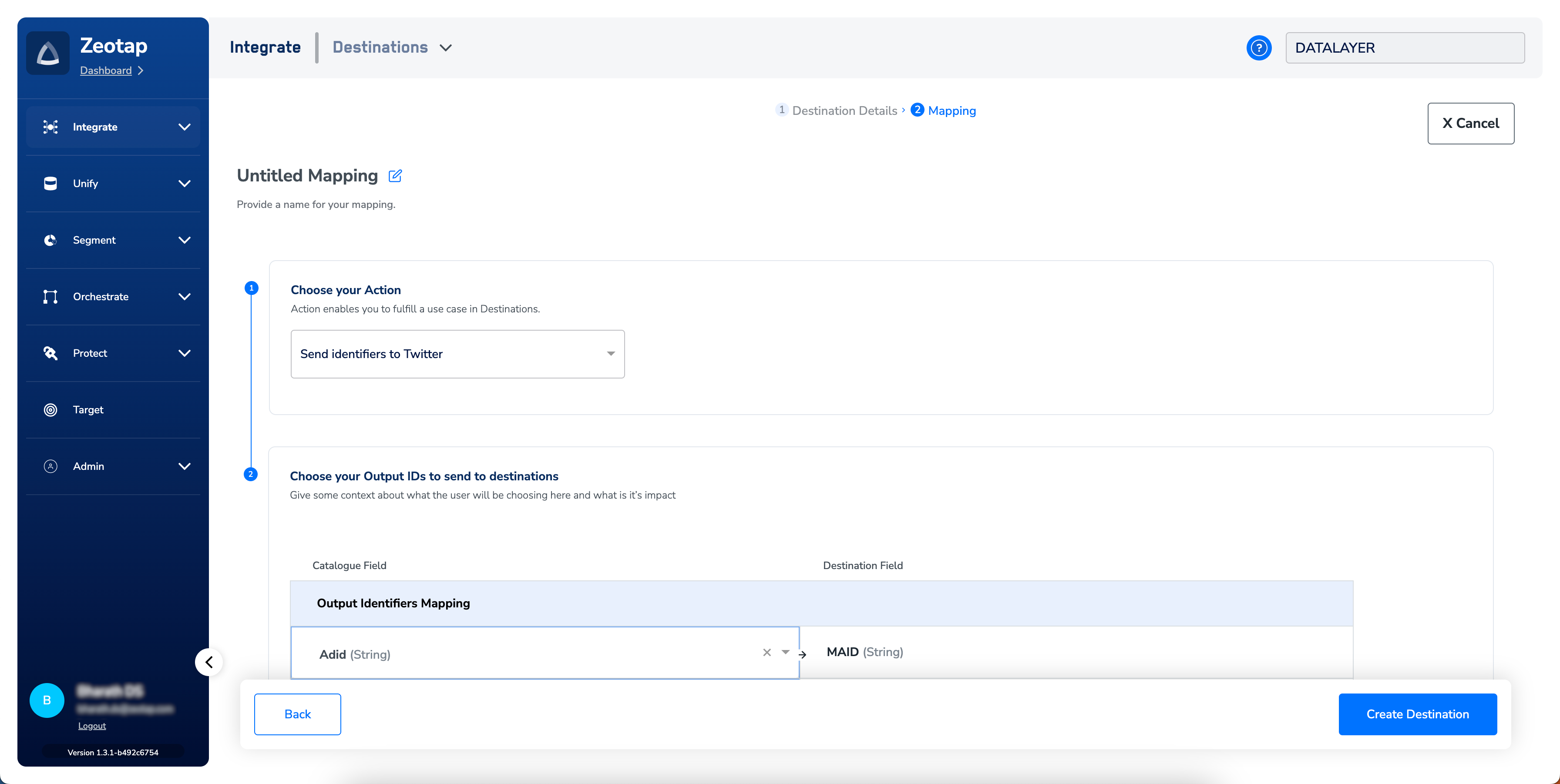
Link an Audience to the Twitter Destination
For information about how to link an Audience or segment to the created Destination in Audiences and Target applications, refer here. Note that it can take up to 24 hours for segment to be available at the Twitter seat.Note:The terms Audiences and Segments are used interchangeably to refer to customer cohorts belonging to a specific category. For example, an Audience or a segment can be a specific group of customers who are over 18 years of age and have performed an
addToCart event within the last 30 days.View Audiences on Twitter
Once the segment is pushed, it will appear in Twitter Ads Manager under Tools → Audiences.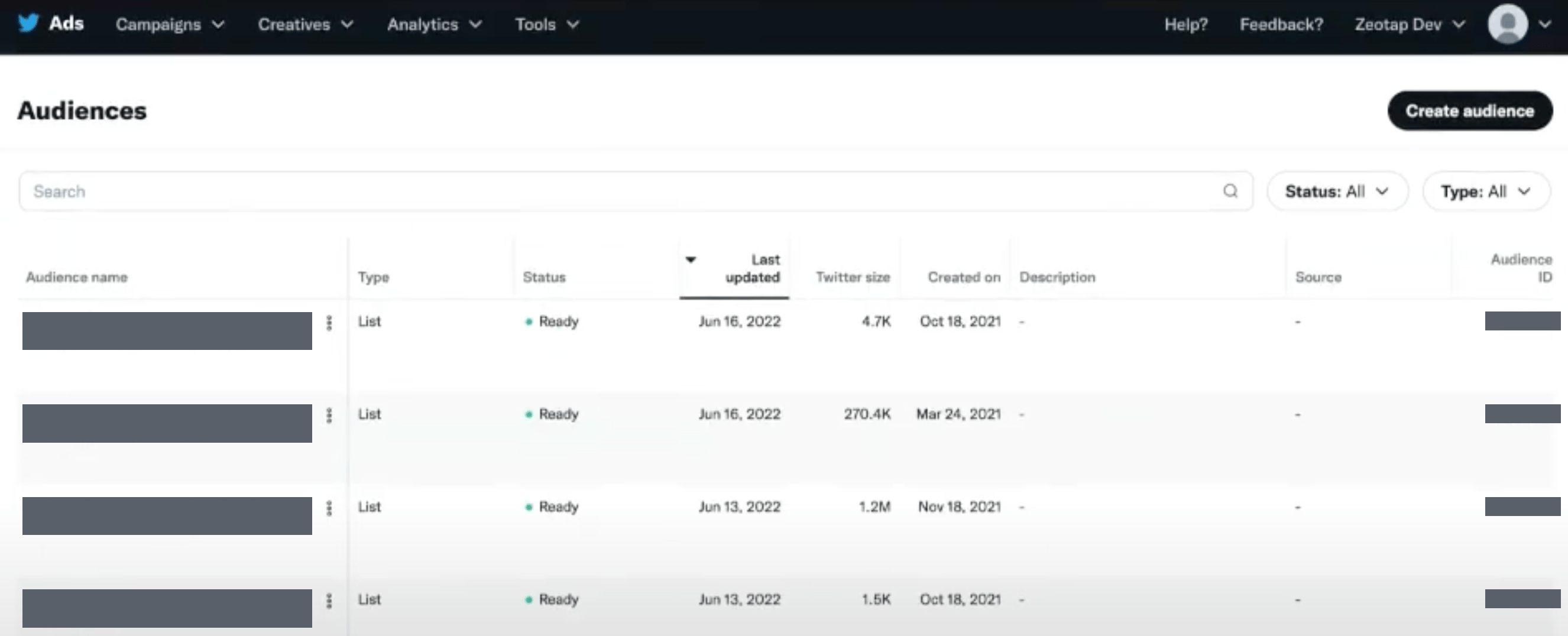
Whitelisting for Twitter
Before pushing any segment to the client’s Twitter account, ensure that you have the account is whitelisted. Failing to do so produces an error as described in the Troubleshooting section. Perform the following steps to whitelist:2
Log in with the appropriate Twitter user credentials.
3
Click your username on the top-right corner and then click Edit access to account from the drop-down menu.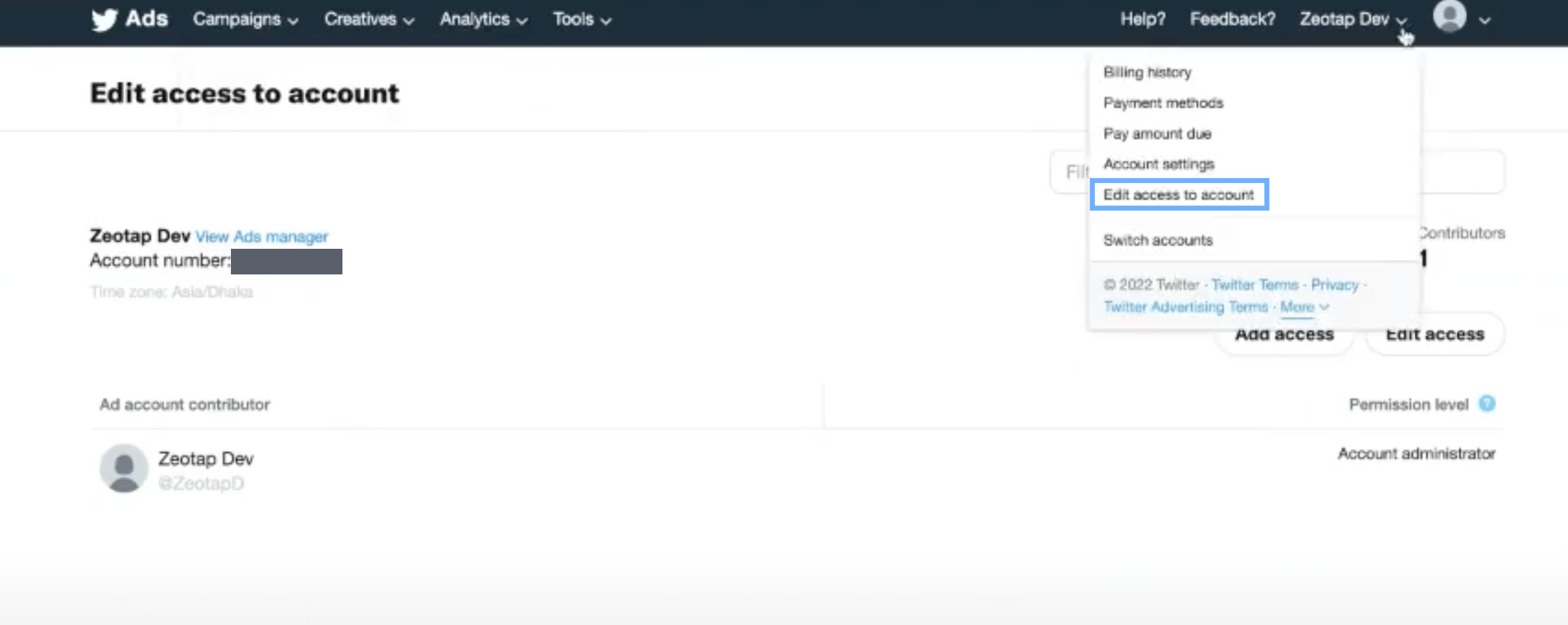
4
Click Add access.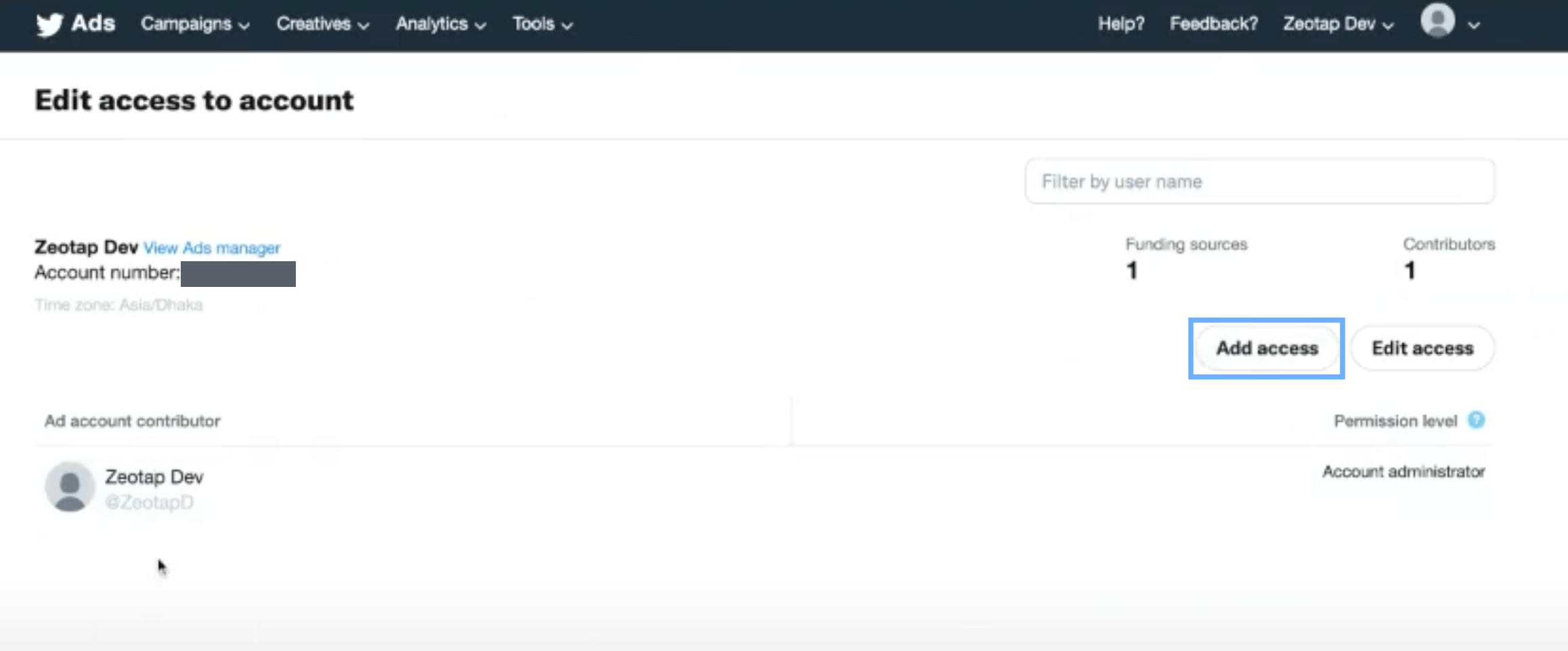
5
Provide the following details:
- In the field marked 1, enter the Twitter handle name.
- In the field marked 2, select Ad manager from the drop-down menu.
6
Click Save changes.
User Disqualification from Audiences
This integration supports user disqualification from audiences. That is, a user can be disqualified from an audience (segment) for various reasons, such as not meeting audience criteria, consent requirements or other conditions set for a particular audience.- When a user disqualifies from an audience, Zeotap CDP initiates a user deletion request in the next refresh cycle. These requests are sent to the audiences linked to the specific destination.
- The disqualified users are excluded from the audiences based on the configured refresh frequency for a particular audience.
- User disqualification is a programmatic process that works automatically. You do not need to specify anything to trigger the disqualification and exclusion of users from audiences.