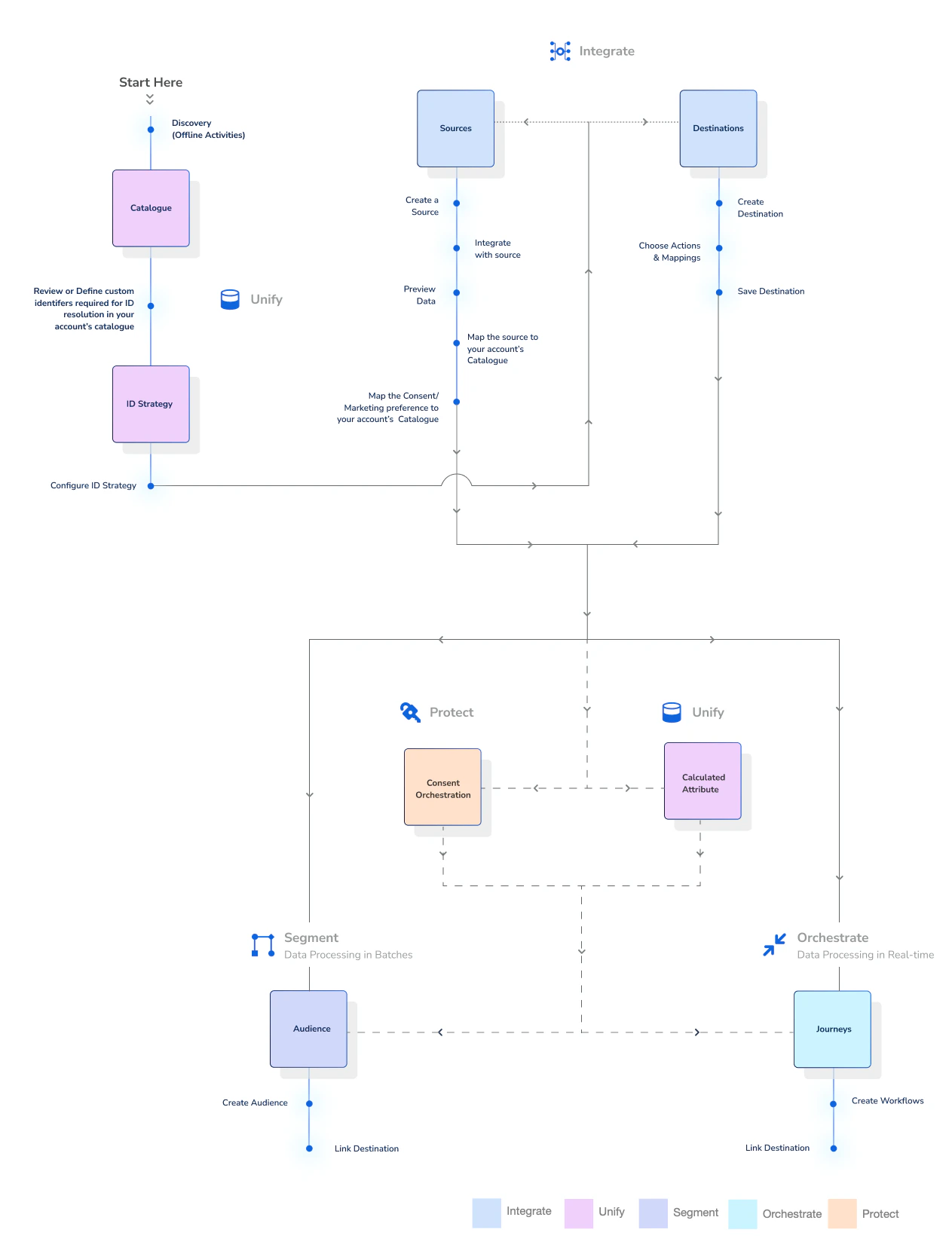
In a nutshell, you first create a source within Zeotap CDP to gather your customer data (like events from your site or app) processed either in batches or real-time. Channel this plethora of data into the Zeotap system in a specific format by mapping your incoming fields to Zeotap Catalogue fields. This forms unified profiles of your customers in the Zeotap system based on the configured ID Strategy. You can then make use of another tool of Zeotap CDP called Segment, to create cohorts of your customers, known as Audiences/segments. Finally, link these Audiences/segments to outbound platforms such as Facebook, Snapchat, Airship, Batch and so on, to achieve your use case using another Zeotap tool named Destinations.
Use cases
The following are some of the use cases that can be solved using Zeotap CDP:
- Unified Customer Profiles: CDP aggregates customer data from various sources to create unified profiles, ensuring a comprehensive understanding of individual customer behaviours and preferences.
- Personalised Marketing: CDP enables businesses to deliver personalised marketing messages by analysing customer data, enhancing the effectiveness of campaigns and increasing customer engagement.
- Real-time Data Access: CDP provides real-time access to customer data, empowering businesses to respond promptly to customer interactions and deliver timely and relevant communication.
- Cross-Channel Coordination: CDP ensures consistent messaging across different channels, maintaining a cohesive brand image and improving the overall customer experience.
- Optimised Campaigns: CDP-driven insights refine marketing campaigns, improving targeting accuracy and maximizing Return on Investment (ROI) by tailoring strategies based on customer behaviour.
- Customer Retention Strategies: CDP identifies potential churn indicators, allowing businesses to implement proactive customer retention strategies and personalised engagement to retain valuable customers.
- Compliance with Data Protection Regulations: CDP centralises customer data management, facilitating compliance with data protection regulations by ensuring secure and organised handling of customer information.
- Effective Suppression of Existing Customers: CDP suppresses existing customers from marketing campaigns to prevent repeated targeting, reducing marketing fatigue, and avoiding unnecessary outreach to those already engaged.
- Optimising Loyalty Programs: CDP supports loyalty programs by tailoring promotions based on individual customer profiles, increasing customer engagement, and fostering loyalty through targeted incentives.
- Preventing Customer Fatigue: CDP analyses customer interaction patterns to detect signs of fatigue, enabling businesses to adjust marketing strategies and content to maintain customer interest and satisfaction.
Last modified on February 26, 2026