

How stitching works
As per the nature of unknown or anonymous interaction, the identifier that is received or tracked is always of low fidelity. If these low-fidelity identifiers are marked as Secondary, then they do not unify with a known or high-fidelity identifiers’ profile. If you want to unify these anonymous profiles with a known identity, then you have to even consider low fidelity IDs in the Primary classification. This setting itself starts unifying the profiles with high-fidelity-based customer profiles. However, we recommend that you keep these low-fidelity identifiers at the lowest priority when compared to the other high-fidelity identifiers in the Primary classification. Based on this setting, this ID participates in identity resolution and unification only in the absence of other higher-fidelity identifiers.Example configuration
You classify and prioritise identifiers on the Prioritise your IDs screen of the ID Strategy configuration — drag an ID between the Primary, Secondary, and Disabled classifications and between priority levels within a classification.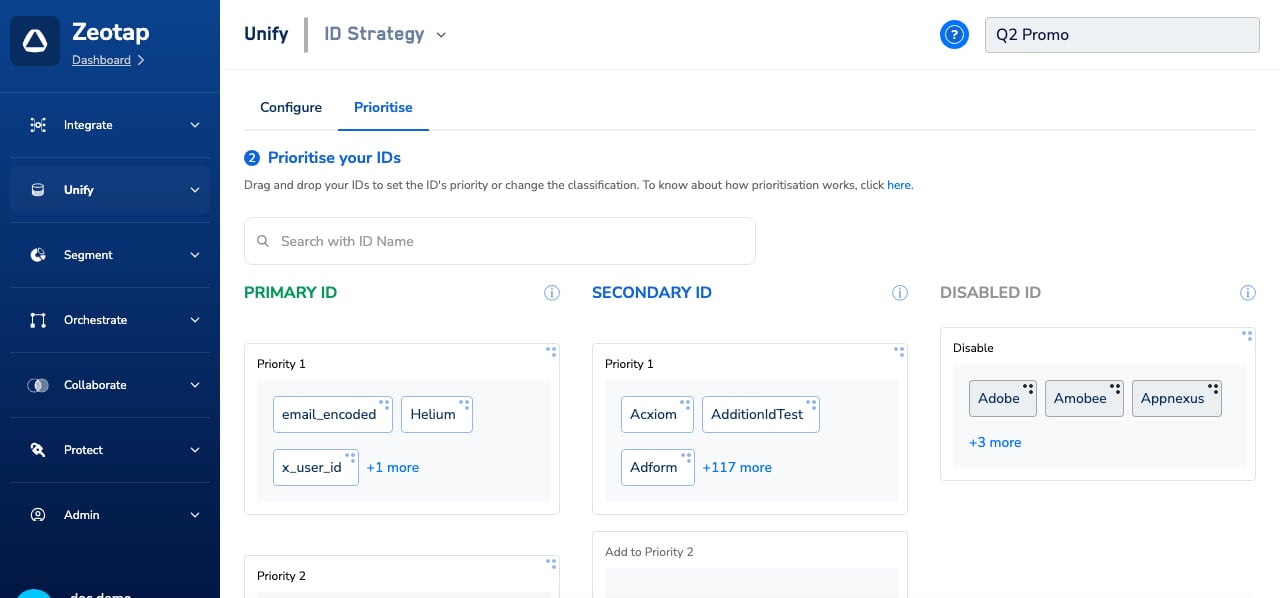
The Prioritise your IDs screen: Primary priorities, Secondary IDs, and Disabled IDs.
Here, the low-fidelity
GA Client ID is included in the Primary classification at the lowest priority (3), so it can stitch anonymous website visits to the known profile — but only when no higher-fidelity Primary ID is present in the record.
How records resolve
Changes to an ID strategy apply to newly ingested records only — see Edit an ID Strategy for the considerations before modifying a live strategy.